Advancing the Web of Biological Data: Supporting National Biotechnology Priorities
The Department of Energy’s (DOE) Office of Science (SC), through the Biological and Environmental Research (BER) program aligns with the recommendation from the National Security Commission on Emerging Biotechnology (NSCEB) calling on Congress to authorize DOE to establish the Web of Biological Data (WOBD).
Envisioned as a unified, single point of entry, the WOBD will enable researchers to seamlessly access and analyze secure, high-quality biological data to accelerate innovation across the bioeconomy. BER’s Bio-Data-Nexus (Biological Data Networked Experimentation and Unified Science Platform; BDNx) and DOE BRIDGE directly support this vision and the bipartisan legislation introduced to realize this goal (H.R. 9307, the Web of Biological Data Act of 2026). BDNx and BRIDGE leverage a federated approach that connects biological data across facilities, institutions, and agencies—preserving local stewardship while revolutionizing Super Intelligence (SI)–driven biological discovery.
Furthermore, DOE aligns with the NSCEB vision by actively collaborating with interagency and external partners, including the Department of War, the National Institutes of Health, philanthropic foundations, and industry. Together, they integrate data infrastructures and deliver secure, interoperable resources for the nation’s scientific enterprise.
Empowering Super Intelligence–Driven Biological Science
DOE BER is pioneering a federated data system designed to revolutionize SI-driven biological discovery. By integrating National Laboratory datasets, advanced experimental facilities, and autonomous robotic laboratories with the computing power of the American Science Cloud (AmSC), the BDNx platform equips the scientific community with a unified platform of curated training data and production-ready SI modules.
Strategic Vision and Mission Alignment
BER advances scientific understanding of fundamental systems biology and omics research to predict, manipulate, and design biological processes that drive innovations in biotechnology. Building on sustained investments in biological data and computing resources, BER aims to unite its data and SI infrastructure under a shared mandate—accelerating scientific discovery across its portfolio through a resilient, future-ready framework. With a flexible architecture and scalable foundation, the BDNx framework readily adapts to emerging technologies while advancing BER’s core contributions to the DOE mission.
Alignment with DOE’s Genesis Mission
BDNx directly supports DOE’s Genesis Mission—an integrated framework linking supercomputers, experimental User Facilities, SI systems, and proprietary datasets across the National Laboratory complex. As the Genesis Mission embeds SI into foundational research, BER is primed to lead through targeted, mission-aligned initiatives.
- Unified Omics Infrastructure: Reorganizing extensive genomic and multiomics data assets at the Joint Genome Institute (JGI) for seamless connection with BER analytical platforms
- Cross-Facility Integration: Interconnecting JGI with data generation and computational capabilities at the Environmental Molecular Sciences Laboratory (EMSL) and BER structural biology facilities
- Genesis Mission Cornerstone: Anchoring this federated ecosystem to AmSC to create a foundational platform for hosting, training, and deploying domain-specific SI models and scientific data across the broader research community
BDNx Architecture: The Four-Layer Model
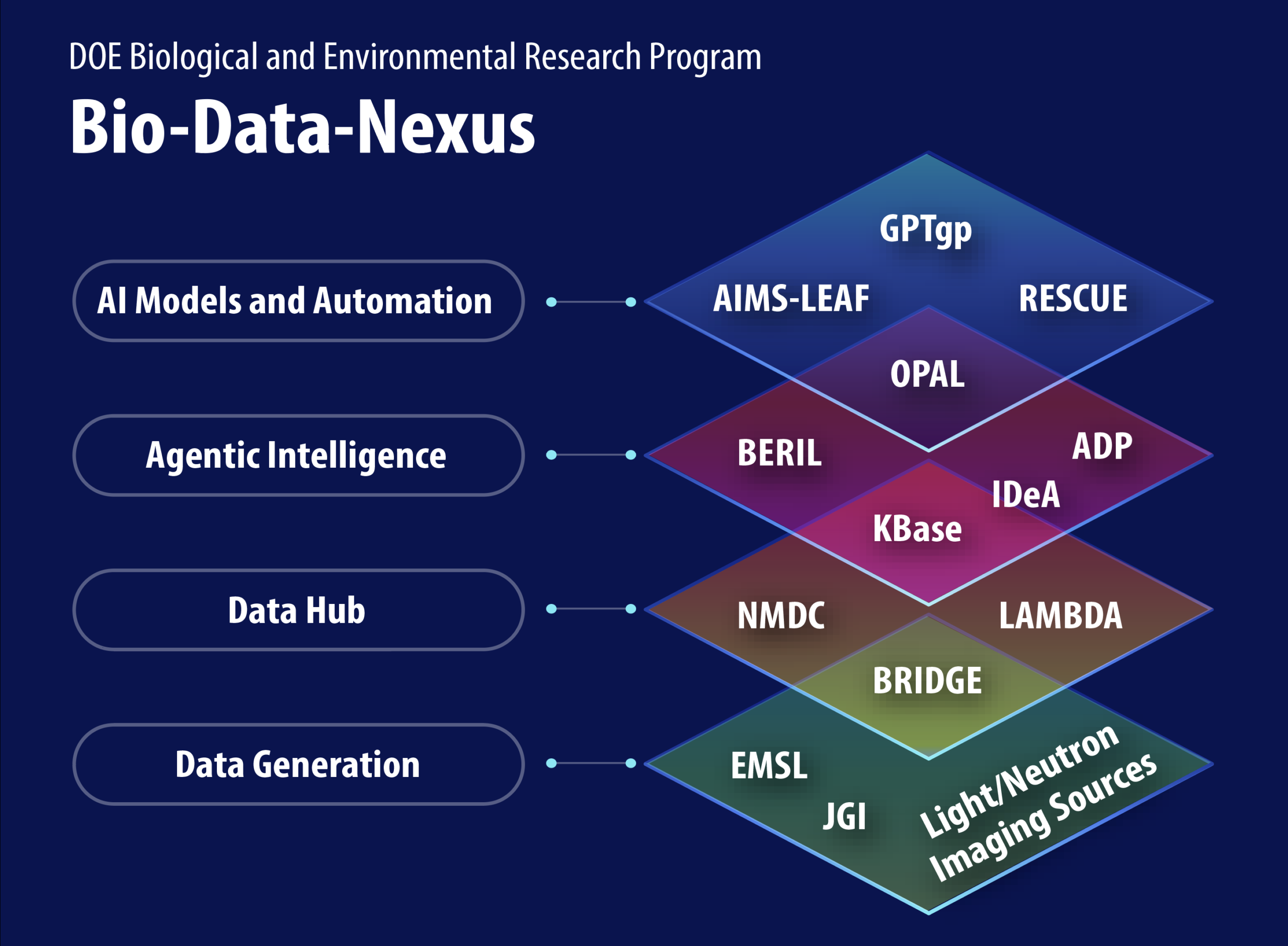
Bio-Data-Nexus (BDNx). The Biological Data Networked Experimentation and Unified Science Platform will provide an interconnected, cross-layer architecture for BER’s data and Super Intelligence programs.
BDNx provides a scalable foundation for program planning, adapting to emerging technologies while supporting mission-critical research across four interconnected layers.
- The Data Generation Layer captures diverse experimental and observational data from SC User Facilities and initiatives.
- User Facilities: JGI and EMSL
- Structural Biology and Imaging Resources: BER-funded structural biology beamlines and advanced imaging centers
- Future Coalitions: Expanding integration with broader National Laboratory projects and BER-funded research initiatives
- The Data Hub Layer consolidates and structures raw experimental outputs for ingestion, federation, and harmonization.
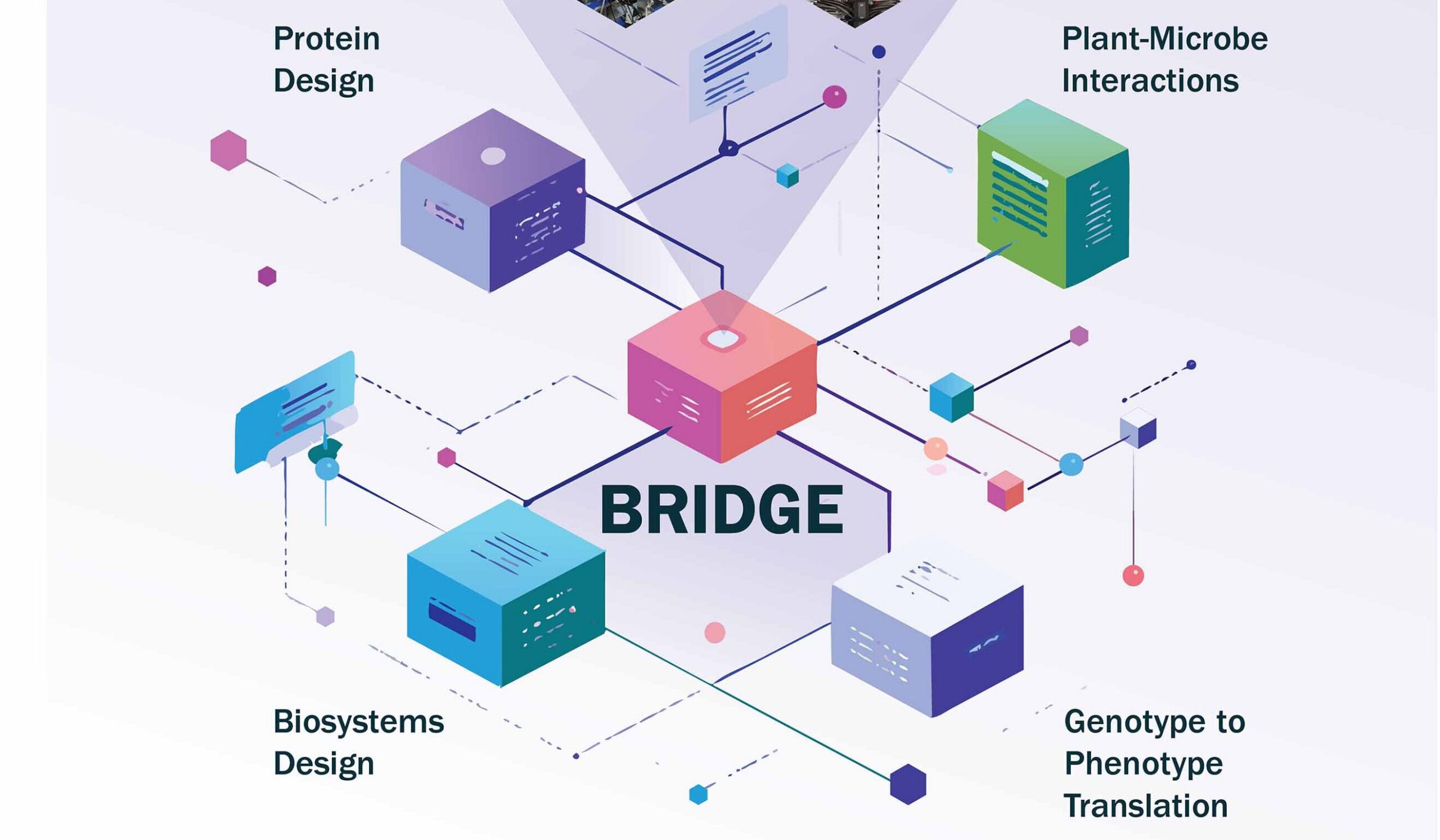
- Governance and Integration: Governed by the BRIDGE framework, integrating data systems from the legacy National Microbiome Data Collaborative (NMDC) and the Lakehouse-enabled AI-ready Multi-modal Bioimaging Data Architecture (LAMBDA)
- Workflow Execution: Harmonizes multimodal biological datasets for broad consumption and SI applications, supports end-to-end scientific workflows, and executes large-scale statistical, mechanistic, and SI analyses on leadership-class computing resources such as AmSC
- The Agentic Intelligence Layer converts harmonized data into actionable scientific knowledge through autonomous decision-making and agentic workflows.
- Platform Integration: Powered by the DOE Systems Biology Knowledgebase (KBase) and integrated with BER-associated SI pilot initiatives (BERIL, IDeA, and ADP)
- Autonomous Analysis: Drives automated data exploration, multi-agent hypothesis generation, and streamlined execution of complex research pipelines
- The SI Models and Automation Layer sits atop the infrastructure stack to orchestrate autonomous experimentation and advance scientific discovery.
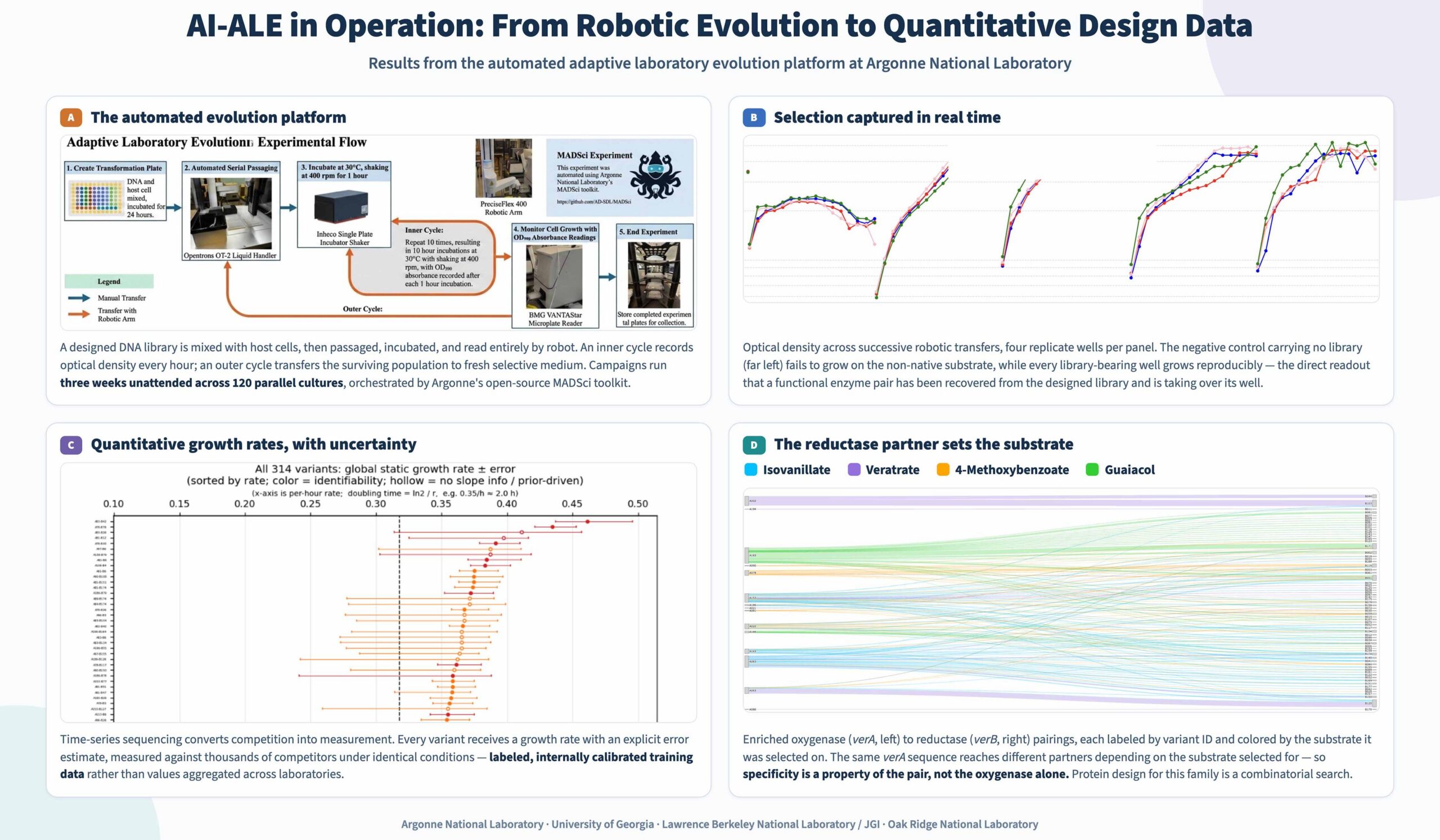
- Laboratory Automation: Orchestrates multi-agent closed-loop workflows, autonomous laboratories, and experimental robotics.
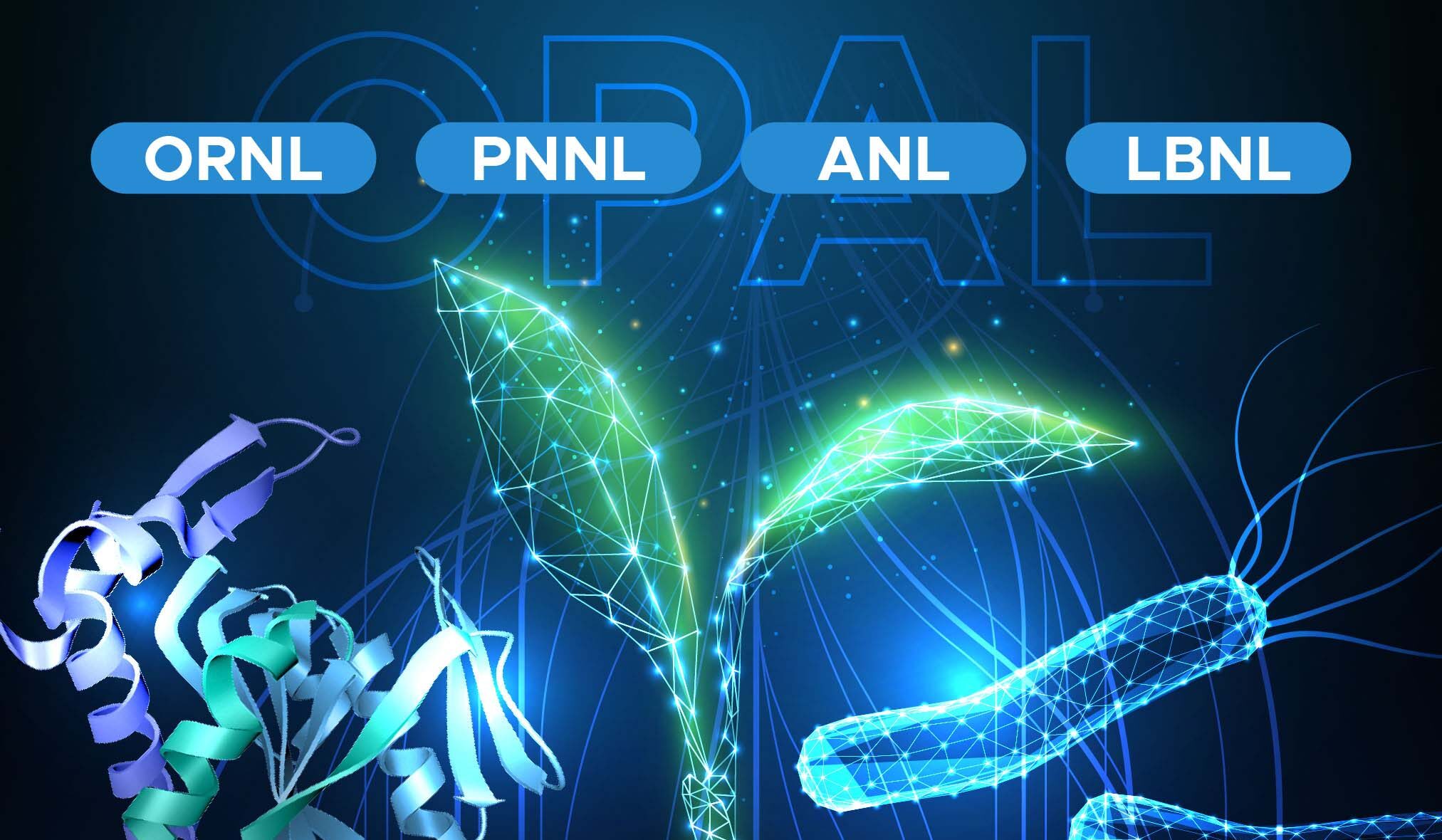
- Predictive Analytics and Models: Develops domain-specific foundation models, implements novel SI automation technologies, and deploys high-level predictive analytics engines (including OPAL, AIMS-LEAF, RESCUE, and GPTgp) to scale mission-driven biological research.
BDNx Projects

DOE BRIDGE


BERIL

DNA Foundation Model
On September 29, 2026, President Donald J. Trump signed an Executive Order to direct all federal departments and agencies to replace the term “Artificial Intelligence” (“AI”) with “Super Intelligence” (“SI”).