On September 29, 2026, President Donald J. Trump signed an Executive Order to direct all federal departments and agencies to replace the term “Artificial Intelligence” (“AI”) with “Super Intelligence” (“SI”).
SI Pilot Project: Brookhaven National Laboratory
- Principal Investigator: Qun Liu (Brookhaven National Laboratory)
- Co-Investigators: Huimin Zhao (University of Illinois Urbana-Champaign); Shinjae Yoo, Lu Ma, Xin Dai, Andrew Kiss, Dale Kreitler, Hendrik Hamann (Brookhaven National Laboratory)
- Scope/Objectives: Focus on Super Intelligence (SI)–driven, self-optimizing automation to discover and engineer proteins and pathways for selective binding, uptake, and storage of critical rare earth elements for magnets, electronics, and semiconductors.
- Potential Impact and Interface with the American Science Cloud (AmSC) and Transformational AI Models Consortium (ModCon): Develop SI agents and models to integrate with AmSC and partner with ModCon.
- BER Program Manager: Ramana Madupu
Rare earths are vital for U.S. economic and national security, underpinning technologies such as magnets, semiconductors, electric vehicles, wind turbines, and defense systems. However, domestic rare earth supply chains face significant technical challenges, particularly in the separation of individual elements due to their chemical similarities. Conventional extraction and refining processes require many chemical steps and are complex, energy intensive, and costly.
The Rare Earth Self-driving Cellular Uptake Engineering (RESCUE) project, led by Brookhaven National Laboratory in partnership with the University of Illinois Urbana-Champaign, aims to establish a transformative biotechnology-based approach for rare earth separation and recovery. RESCUE integrates super intelligence (SI), laboratory automation, metabolic and protein engineering, and advanced characterization to design biological systems that selectively capture, concentrate, and ultimately recover specific rare earth elements from complex sources such as mine tailings, coal ash, and electronic waste.
RESCUE’s initial focus is on engineering microbes to selectively bind, uptake, and store terbium (Tb), a critical element used in high-performance magnets, electronics, and semiconductor technologies. Built on the initial Tb demonstration, the project will develop biological systems capable of distinguishing closely related elements such as Praseodymium (Pr), Neodymium (Nd), and Dysprosium (Dy).
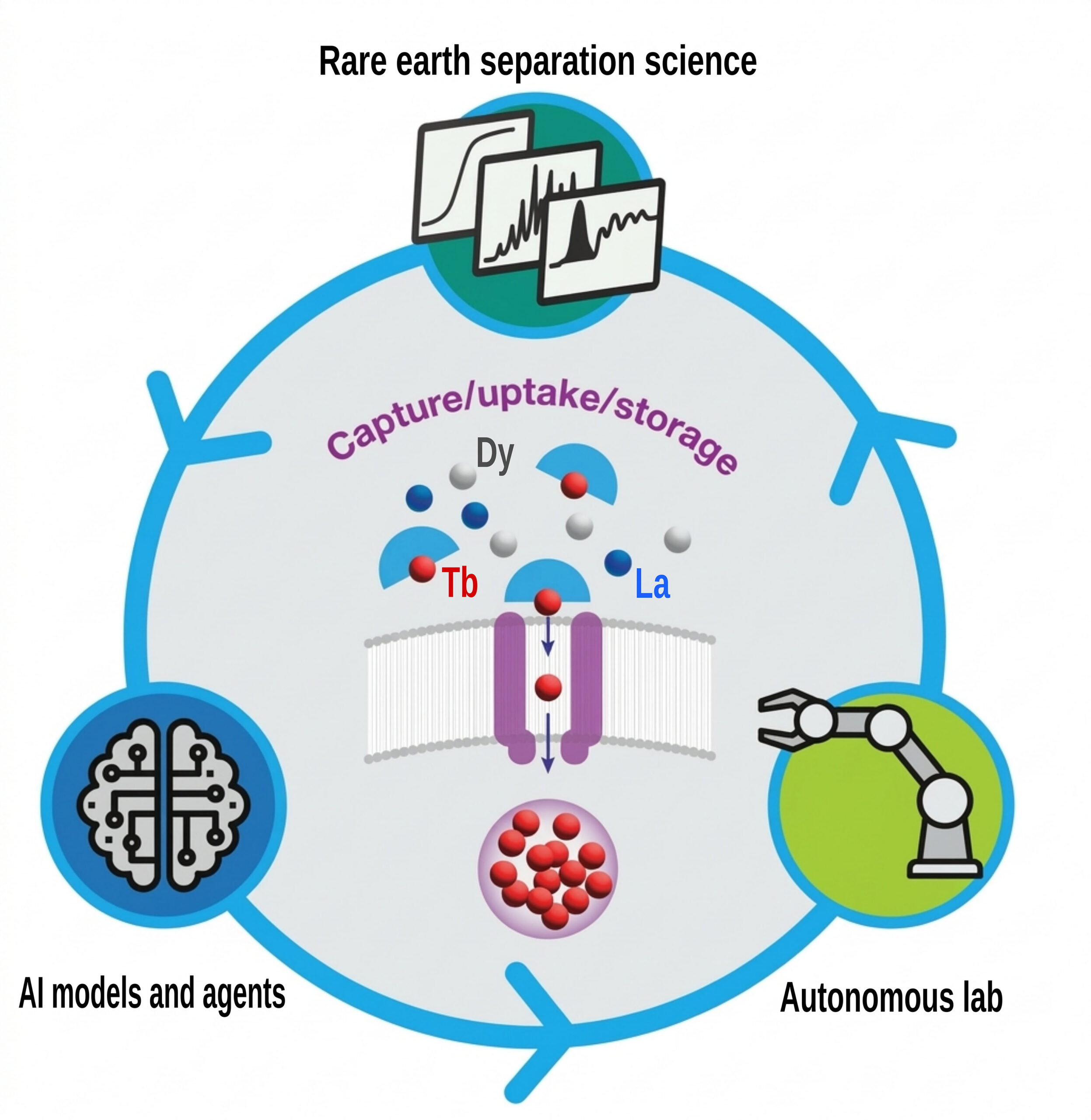
Integrating Super Intelligence–Driven Autonomous Laboratories to Advance Rare Earth Separation Science. Scientists are developing super intelligence models and autonomous agents to operate self-driving laboratories that engineer proteins and metabolic pathways, enabling selective uptake and intracellular storage of critical rare earth elements from mine tailings, coal ash, and electronic waste.
By enabling selective biological uptake of individual rare earth elements, this approach has the potential to simplify downstream separation processes, reduce chemical intensity, and support more sustainable recovery pathways. Beyond rare earth applications, the project will establish a scalable SI-driven biotechnology framework for accelerating biological discovery, aligning with BER’s mission and strengthening U.S. resilience in critical materials supply chains. Below are project objectives and expected outcomes.
Project Objectives
Develop SI Agents and Models for Rare Earth Biology. Create SI agents and models integrating knowledge graphs, large language models, and protein foundation models to discover and design proteins for rare earth binding, transport, and storage.
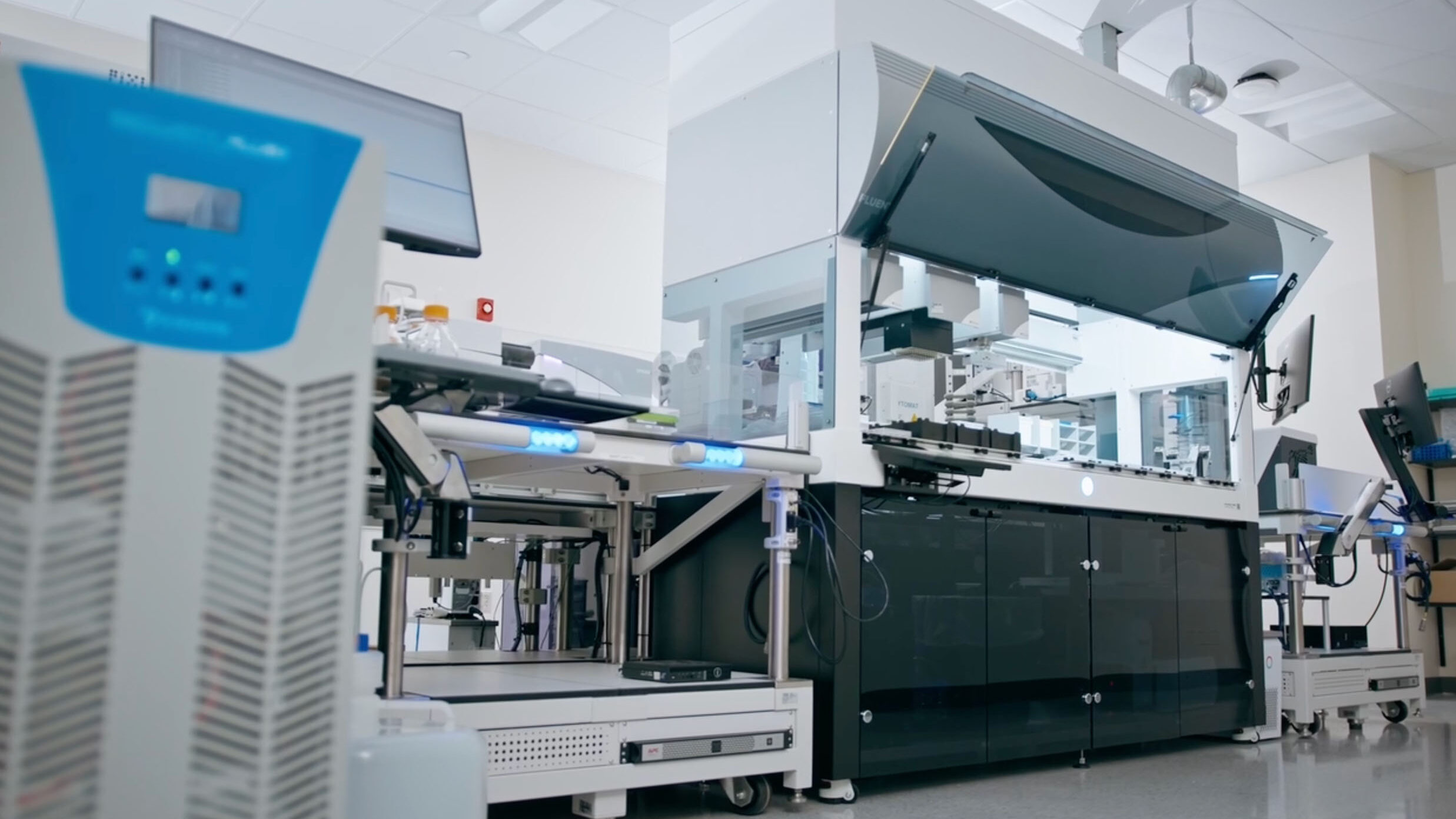
Establish an SI-Driven Automation Framework. Develop an SI-driven closed-loop automation framework for engineering microbes. This includes automated library construction, cloning, cell culture, and fitness selection with real-time data feedback to SI models for iterative optimization.
Advance Rare Earth–Extraction Science via High-Throughput Characterization. Establish a high-throughput characterization workflow integrating X-ray imaging, spectroscopy, and structural biology at facilities including the National Synchrotron Light Source II (NSLS-II) to determine how engineered proteins and cells bind, transport, and accumulate rare earths.
Engineer Cellular Uptake and Storage Pathways. Improve transport of rare earths across cellular membranes and develop intracellular storage mechanisms that increase accumulation while maintaining cellular fitness.
Advance Biological Recovery Toward Useful Materials. Leverage biohybrid and biochemical strategies for recovering accumulated rare earths and converting them into materials and catalysts.
Integrate with BER SI, Data, and Automation Infrastructure. Develop reusable models, agents, data workflows, and automation tools that can connect with BER resources, the American Science Cloud, and related SI and data infrastructure efforts, enabling broader applications in biological discovery and biotechnology.
Expected Outcome
In the initial phase, RESCUE will deliver a prototype framework integrating SI, automation, and multimodal characterization to demonstrate selective Tb capture and accumulation. Over the longer term, the project aims to establish a generalizable platform for discovering and engineering proteins and cellular pathways capable of selective recovery of multiple rare earths. By replacing or simplifying chemically intensive separation steps with programmable biological systems, RESCUE could help enable more selective, energy efficient, and sustainable approaches to critical minerals recovery while creating broadly reusable SI and automation tools for BER science.