On September 29, 2026, President Donald J. Trump signed an Executive Order to direct all federal departments and agencies to replace the term “Artificial Intelligence” (“AI”) with “Super Intelligence” (“SI”).

Genesis Mission
The Genesis Mission is a national effort designed to significantly enhance scientific discovery and engineering through the strategic integration of Super Intelligence (SI). This mission aims to double the productivity and impact of American research and innovation within a decade. Genesis unites DOE’s National Laboratories, the National Nuclear Security Administration, industry, academia, philanthropy, and other experts to harness Super Intelligence for breakthroughs in energy dominance, discovery science, national security, and more. The mission is focused on three components: developing a computational platform, bringing together world-class innovators across sectors, and addressing 26 science and technology challenges identified by DOE.
Computational Platform
The Genesis Mission centers on establishing an integrated SI platform by leveraging federal scientific datasets to train SI models; create SI agents for hypothesis testing and workflow automation; and connect supercomputers, SI systems, and quantum systems with advanced scientific instruments to form the American Science and Security Platform. Once complete, it will be the world’s most complex and powerful scientific instrument ever built.
Two key Genesis efforts to build the platform are the American Science Cloud (AmSC) and the Transformational AI Models Consortium (ModCon). AmSC is developing a secure, federated, science-optimized environment that integrates DOE’s computing and experimental facilities, data resources, and high-performance networks. ModCon will build and deploy self-improving SI models that advance science, engineering, and energy missions by harnessing DOE’s unique data, facilities, and expertise.
Bringing Together World-Class Innovators
Under the leadership of DOE and the White House Office of Science and Technology Policy, Genesis brings together DOE’s National Laboratories with America’s leading universities, nonprofits, and industry. As part of this effort, the Genesis Mission Consortium is a public-private partnership that unites the nation’s leading science and technology experts to solve critical challenges at unprecedented speed.
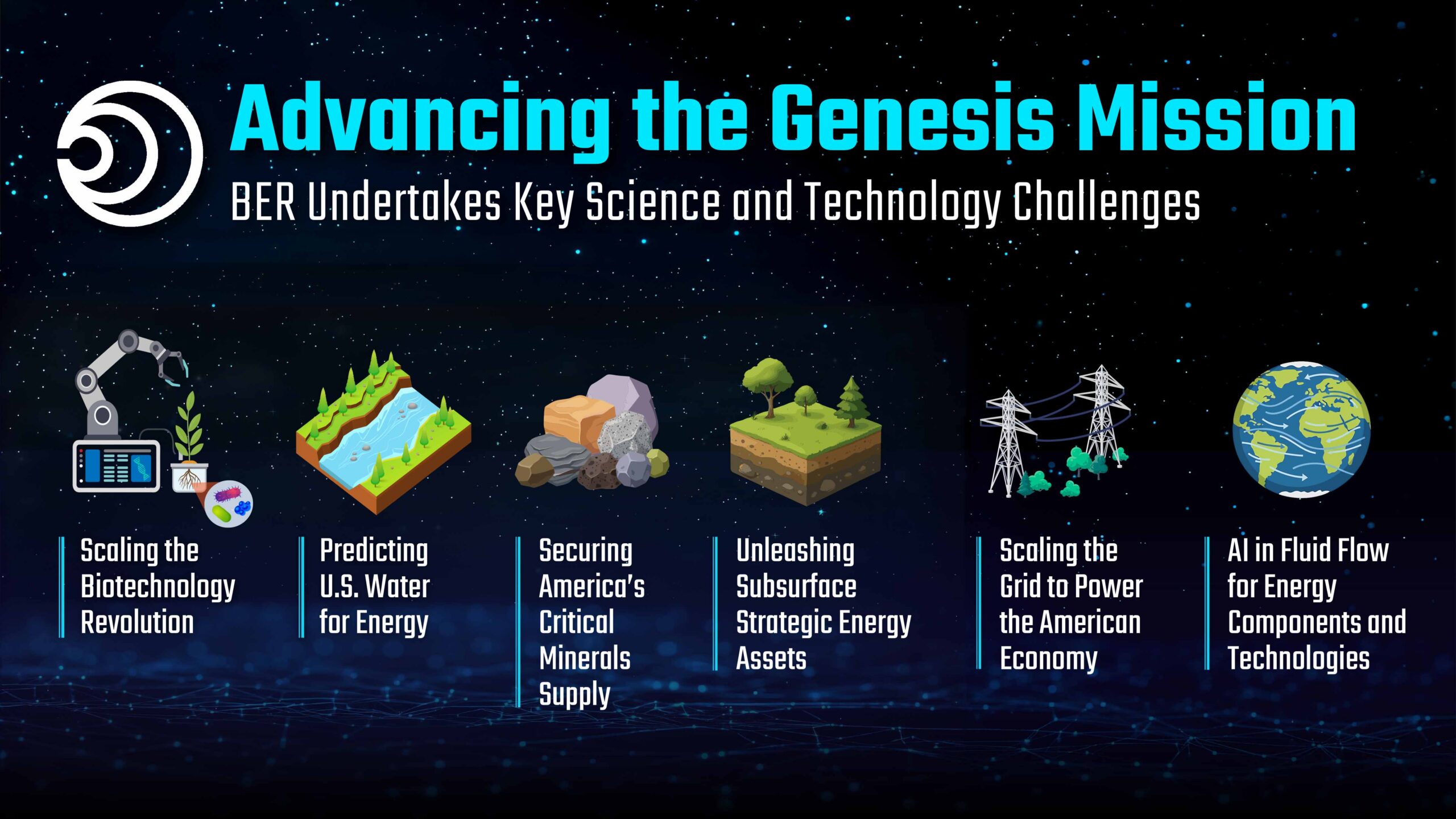
BER-Relevant Science and Technology Challenges. There are six DOE BER-relevant S&T challenges: Scaling the Biotechnology Revolution, Predicting U.S. Water for Energy, Securing America’s Critical Minerals Supply, Unleashing Subsurface Strategic Energy Assets, Scaling the Grid To Power the American Economy, and AI in Fluid Flow for Energy Components and Technologies.
National Science and Technology Challenges
In February 2026, DOE announced national science and technology (S&T) challenges of national importance to advance the Genesis Mission. Through these challenges, the scientific community will develop and deploy the technologies necessary to demonstrate true SI advantage for science and energy. Six challenges relevant to DOE’s Biological and Environmental Research program science are:
- Scaling the Biotechnology Revolution
- Securing America’s Critical Mineral Supply
- Predicting U.S. Water for Energy
- Scaling the Grid to Power the American Economy
- Unleashing Subsurface Strategic Energy Assets
- AI in Fluid Flow for Energy Components and Technologies (AFFECT)
In FY2026, BER selected 58 projects to tackle aspects of these six challenges. BER solicited proposals from interdisciplinary, multi-institutional teams spanning academia, industry, and the National Laboratories. The selected projects will leverage SI to accelerate the pace of scientific discovery. Resulting SI models, workflows, and data will be integrated into the larger Genesis Mission capabilities. Selection for award negotiations is not a commitment by DOE to issue an award or provide funding. Before funding is issued, DOE and applicants will undergo a negotiation process, and DOE may cancel negotiations and rescind the selection for any reason during that process.
BER and Super Intelligence
The BER program is dedicated to fostering innovation in biotechnology by leveraging SI and machine learning (ML) to explore novel concepts in genomics-based research. This initiative aims to accelerate scientific discovery and enhance the understanding of fundamental biological principles, particularly in plant and microbial systems. By integrating SI/ML techniques, the program seeks to improve the design of new biosystems relevant to energy and national security, ultimately driving biotechnological advancements and ensuring U.S. leadership.
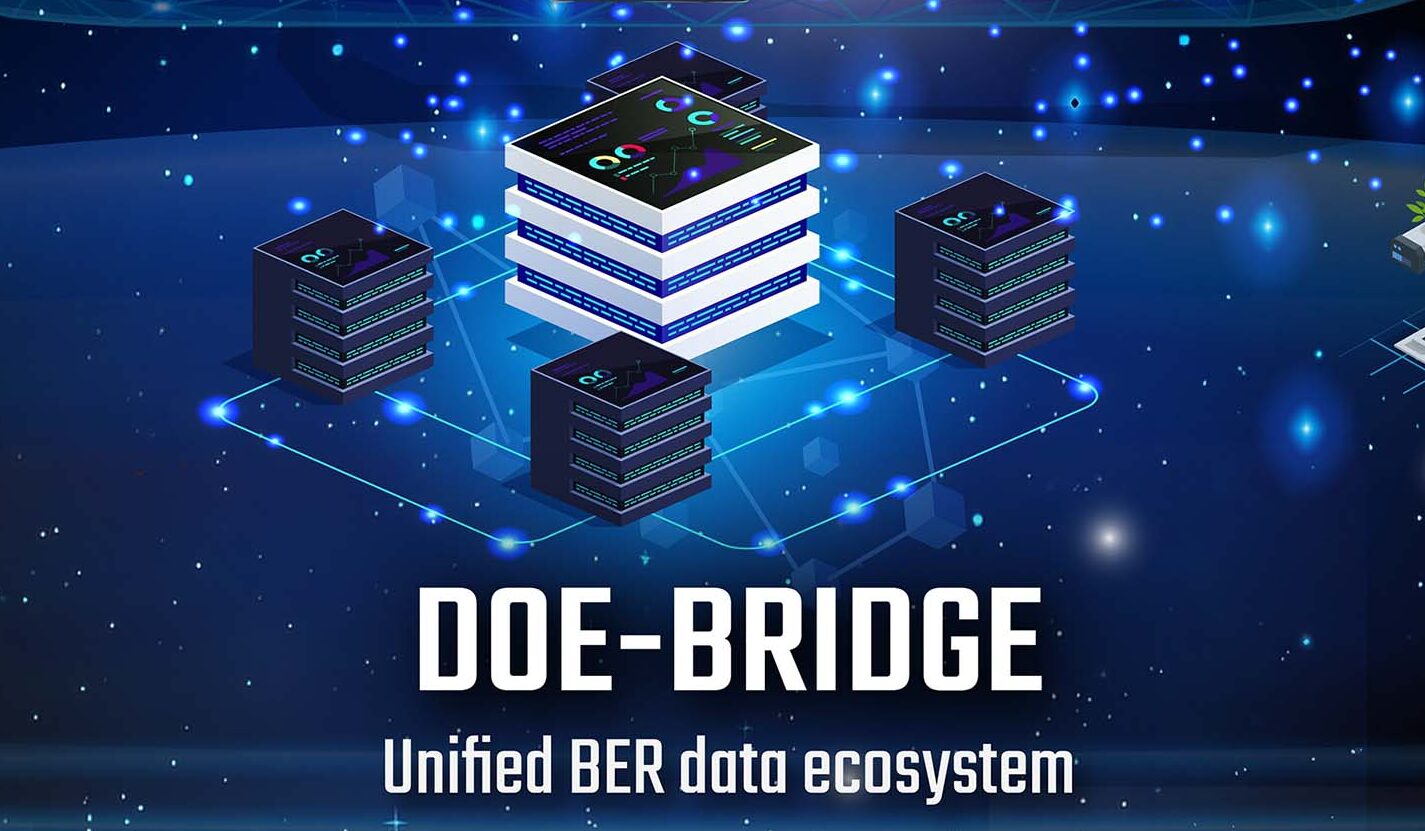
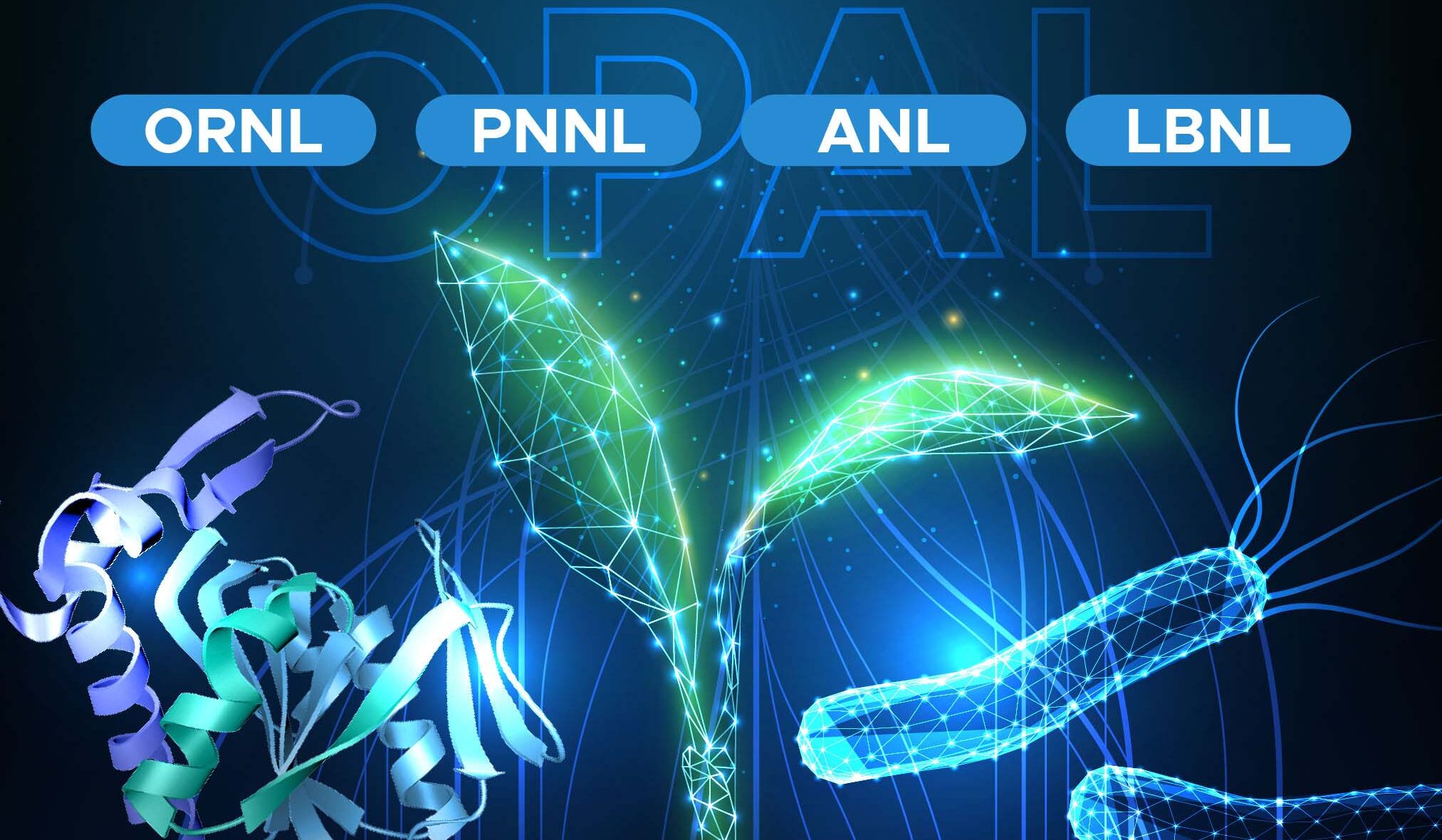
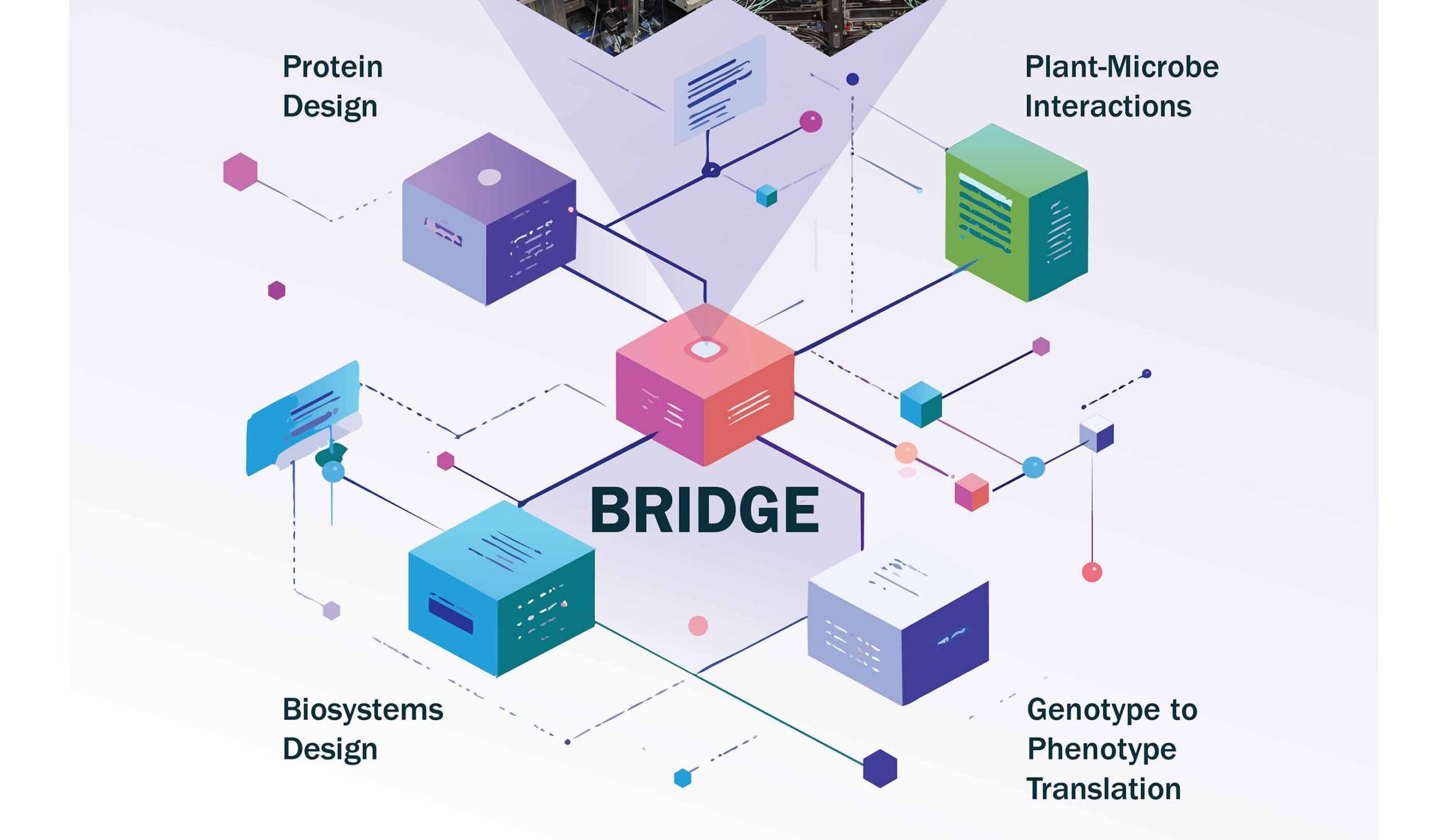
In FY25, BER launched the primary component of its SI infrastructure—the DOE-BRIDGE—with the goal of developing a unified data ecosystem. BRIDGE will be a key Genesis AmSC contributor. Other critical BER Genesis investments are OPAL and LAMBDA.